
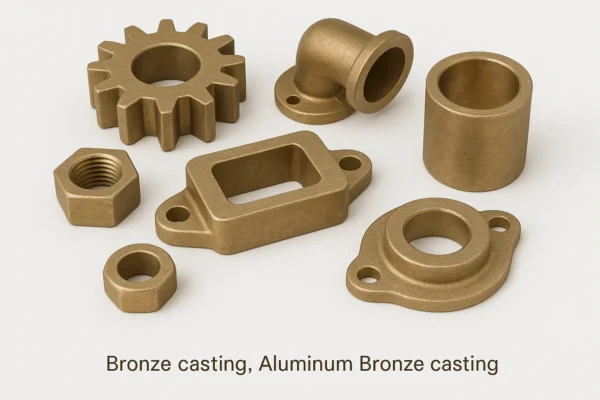
Precision Bronze Casting at our foundry in India
: A Comprehensive Technical Analysis of Alloys, Processes, and Manufacturing Solutions
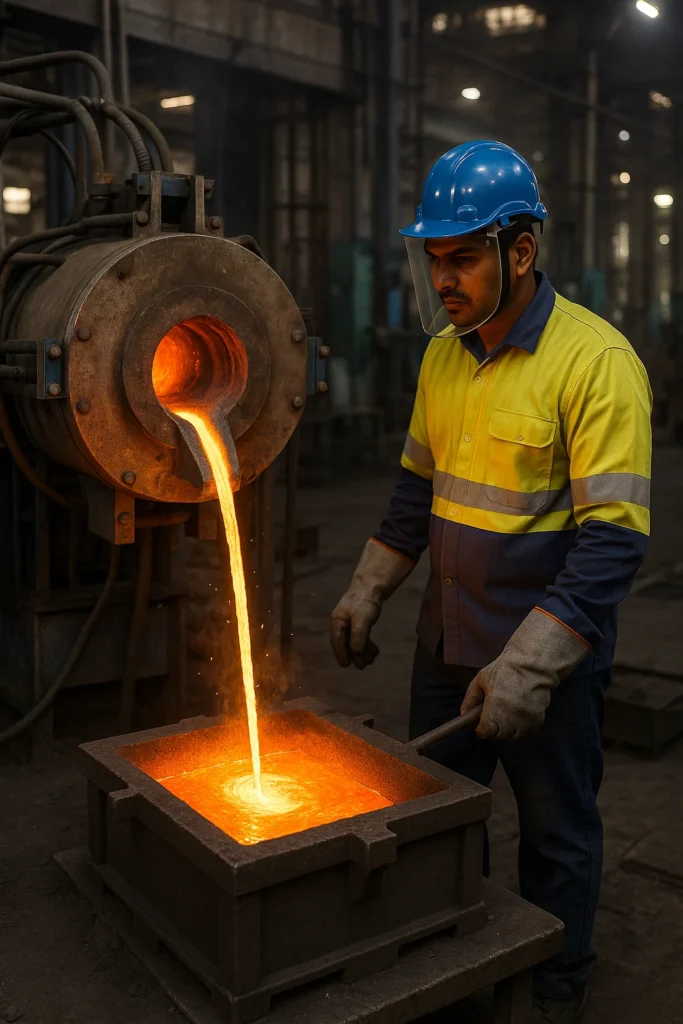
Introduction
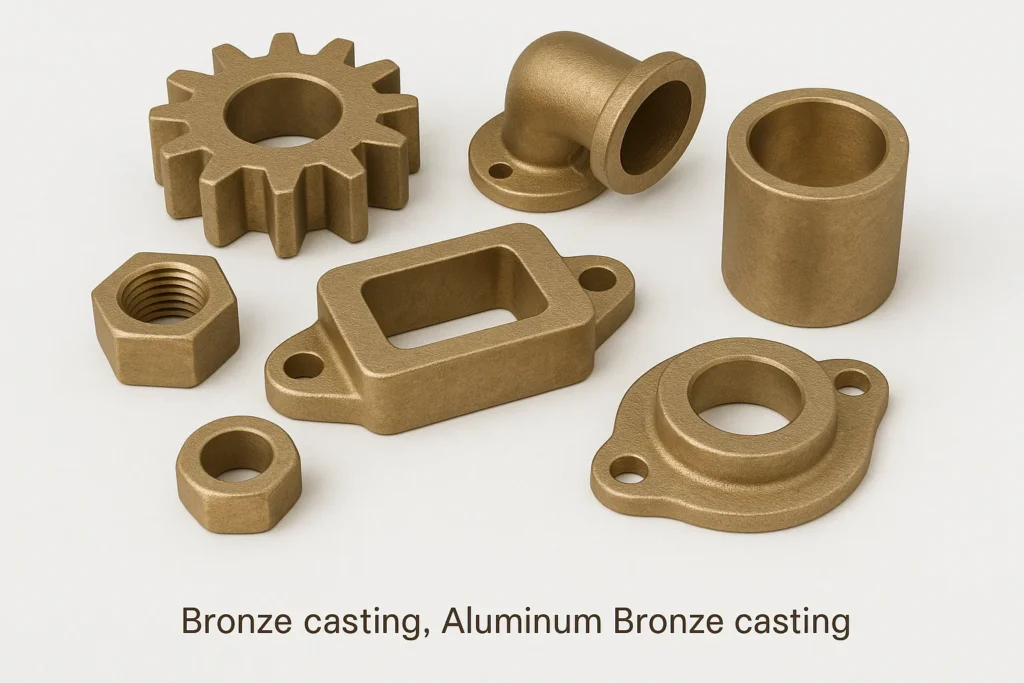
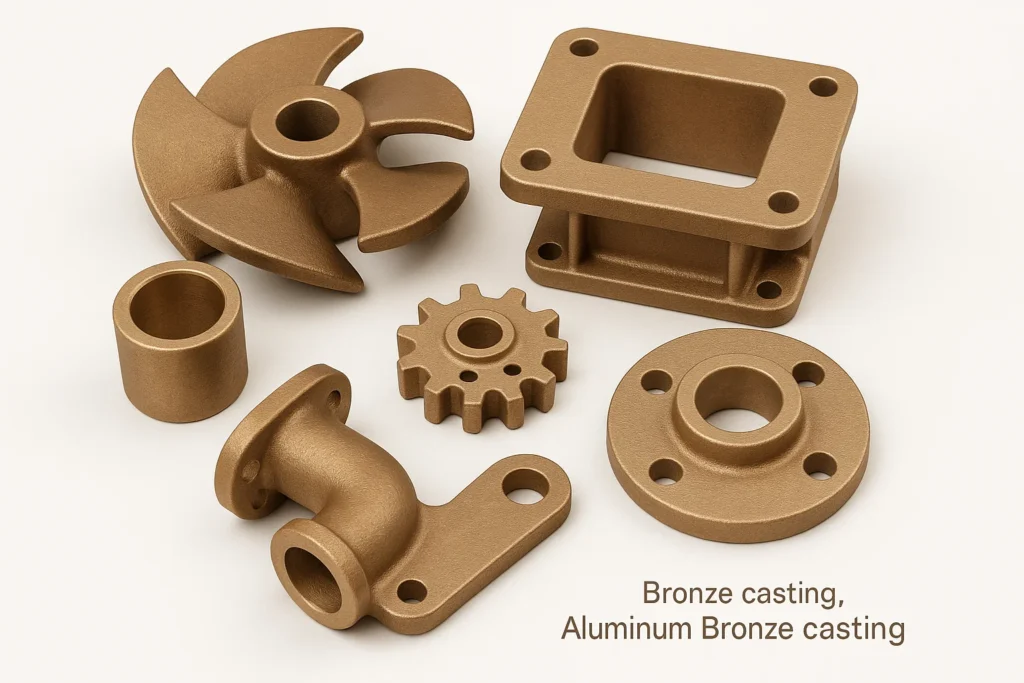
Bronze casting represents a critical manufacturing capability for producing high-performance components across marine, aerospace, industrial machinery, and infrastructure applications. Our foundry specializes in five distinct casting processes—sand casting, investment casting, centrifugal casting, shell molding, and gravity die casting—paired with comprehensive bronze alloy expertise spanning aluminum bronzes (C95200-C95900), manganese bronzes (C86100-C86800), nickel-aluminum bronzes (C63000-C64200), and leaded bronzes (C93200-C94700). This technical overview examines the metallurgical considerations, process selection criteria, and post-casting machining requirements that define optimal component manufacturing. We are a leading Bronze casting foundry in India offer Bronze sand casting, Bronze investment casting, Bronze centrifugal casting, Bronze shell molding. We offer Bronze Pipe Fittings, bronze Hotline clamps, Bronze Transformer Spade terminals-Connectors etc.
Bronze Alloy Classifications and Metallurgical Properties
Aluminum Bronze Series
High-Strength Aluminum Bronze (C95400, C95500)
- Composition: 10-11% Al, 4-5% Fe, 1% Ni, balance Cu
- Tensile strength: 90,000-110,000 psi
- Yield strength: 45,000-65,000 psi
- Elongation: 12-18%
- Superior cavitation and corrosion resistance
- Solidification range: 1900-1040°F with α+γ₂ phase transformation
Nickel-Aluminum Bronze (C95800, C95900)
- Composition: 8.5-9.5% Al, 4-5% Ni, 3.5-4.5% Fe, balance Cu
- Tensile strength: 110,000-125,000 psi
- Exceptional seawater corrosion resistance (≤0.5 mpy)
- Microstructure: α-phase matrix with κ precipitates
- Applications requiring high strength-to-weight ratio with marine exposure
The aluminum bronze family exhibits excellent mechanical properties through precipitation hardening mechanisms. The iron content forms iron-rich intermetallic phases that provide grain refinement, while nickel additions enhance both strength and corrosion resistance through solid solution strengthening. Heat treatment protocols typically involve solution annealing at 1650°F followed by controlled cooling to optimize the α+κ phase distribution.
Manganese Bronze Series
High-Tensile Manganese Bronze (C86300, C86400)
- Composition: 58-60% Cu, 36-42% Zn, 0.5-1.5% Fe, 0.5-1.5% Mn, 0.8-1.5% Al
- Tensile strength: 65,000-90,000 psi
- Excellent machinability rating: 80% (free-cutting brass = 100%)
- Lower density (7.5 g/cm³) reduces component weight
- Zinc vapor pressure considerations during melting (evaporation >1650°F)
Naval Brass/Manganese Bronze (C86500)
- Enhanced zinc content (38-42%) for improved fluidity
- Tin additions (0.7-1.2%) inhibit dezincification
- Ideal for complex geometries requiring thin-wall sections
- Pressure tightness suitable for hydraulic housings
Manganese bronze alloys derive their designation from historical composition evolution rather than high manganese content. The aluminum and iron additions provide precipitation strengthening, while the high zinc content ensures superior castability and die filling characteristics. These alloys exhibit excellent bearing properties under boundary lubrication conditions.
Nickel Bronze Series
Copper-Nickel Alloys (C96200, C96400)
- Composition: 10-30% Ni, 1-2% Fe, balance Cu
- Exceptional biofouling resistance in marine environments
- Thermal conductivity: 20-30 BTU/(hr·ft·°F)
- Corrosion rate in seawater: ≤0.1 mpy
- Linear coefficient of thermal expansion: 9-10 × 10⁻⁶/°F
The nickel-copper system forms complete solid solubility, enabling tailored property optimization. Iron additions (typically 1-2%) are critical for creating protective oxide films in seawater through selective oxidation mechanisms. These alloys exhibit minimal galvanic corrosion when coupled with steel, making them ideal for bimetallic assemblies.
Leaded Bronze Series
High-Leaded Tin Bronze (C93200, C93700)
- Composition: 6-8% Sn, 6-8% Pb, 2-4% Zn, balance Cu
- Compressive strength: 30,000-40,000 psi
- Lead provides solid lubricant effect for bearing applications
- Maximum operating temperature: 450°F continuous
- PV limit (bearing): 50,000-75,000 psi·fpm
Leaded Semi-Red Brass (C84400)
- Composition: 5% Pb, 5% Sn, 5% Zn, balance Cu
- Superior conformability for misaligned bearing conditions
- Machinability rating: 70%
- Applications: bushings, thrust washers, wear plates
Lead exists as discrete globular precipitates within the bronze matrix, creating microscopic lubrication reservoirs. The lead content must be carefully controlled during melting to prevent segregation, with pouring temperatures maintained between 2050-2150°F to ensure adequate dispersion. Lead-free alternatives (bismuth bronzes, C89510) are emerging for potable water applications under NSF/ANSI 61 compliance requirements.
Comprehensive Bronze Grades Reference Tables
1. Manganese Bronze
| Alloy Designation | Composition (%) | International Equivalents | Common Applications |
|---|---|---|---|
| C86100 | Cu 62, Zn 25, Fe 2, Al 7, Mn 4 | BS HTB1, EN CC333G | High-strength marine components, propeller shafts |
| C86200 | Cu 63, Zn 25, Fe 3, Al 6, Mn 3 | BS 1400 LG2, DIN G-CuAl10Fe | Marine propellers, pump impellers, valve stems |
| C86300 | Cu 62, Zn 25, Fe 2, Al 7, Mn 4 | BS PB1, EN CC333G | High-strength gears, worm wheels, bearing cages |
| C86400 | Cu 58, Zn 39, Fe 1, Mn 1, Al 1 | DIN CuZn40Mn1, EN CW720R | Architectural trim, marine hardware, fasteners |
| C86500 | Cu 57, Zn 40, Fe 1, Mn 1 | BS CZ122, ISO CuZn39Mn1AlPbSi | Bridge bearings, bushings, wear plates |
| C86700 | Cu 64, Zn 24, Al 4, Fe 4, Mn 4 | DIN G-CuAl7Si2, BS HTB3 | Pump casings, marine fittings, stern tubes |
| C67300 (wrought) | Cu 63, Zn 30, Mn 2, Fe 2, Al 3 | DIN CuZn37Mn3Al2PbSi, BS CZ114 | Tie rods, ship propeller shafts, bolts |
| C67400 (wrought) | Cu 66, Zn 28, Mn 3, Al 3 | ISO CuZn28Al2Mn2, JIS C6783 | Marine stem tubes, structural applications |
| C67500 (wrought) | Cu 64, Zn 26, Mn 3, Al 3, Fe 4 | BS CZ112, DIN CuZn27Al3Mn3Fe1 | High-strength bolts, marine equipment, springs |
Key Properties: Exceptional strength (stronger than many steels), excellent wear and corrosion resistance. Despite the name, modern “manganese bronze” often contains significant aluminum and zinc.
2. Aluminum Bronze
| Alloy Designation | Composition (%) | International Equivalents | Common Applications |
|---|---|---|---|
| C60600 (wrought) | Cu 92, Al 7, Si 1 | DIN CuAl7Si2, BS CA104 | Condenser tubes, heat exchanger tubes, marine hardware |
| C60800 (wrought) | Cu 95, Al 5 | DIN CuAl5, EN CW300G, JIS C6140 | Coins, medals, architectural applications, coinage |
| C61000 (wrought) | Cu 92.5, Al 7, Fe 0.5 | BS CA103, ISO CuAl7 | Condenser plates, hardware, marine components |
| C61300 (wrought) | Cu 93, Al 7 | DIN CuAl7, JIS C6161 | General purpose tubing, heat exchangers |
| C61400 (wrought) | Cu 91, Al 7, Fe 2 | DIN CuAl8Fe3, BS CA104 | Valve seats, pump rods, welding rod |
| C61800 (wrought) | Cu 91, Al 9 | ISO CuAl9, EN CW303G | Aircraft engine parts, bearings, pressure vessels |
| C62300 (wrought) | Cu 87, Al 9, Fe 2, Ni 2 | JIS C6241, DIN CuAl9Fe2 | Marine pump shafts, structural components |
| C62400 (wrought) | Cu 87, Al 11, Fe 2 | DIN CuAl10Fe2, BS CA105 | Gears, cams, valve guides, bushings |
| C63000 (wrought) | Cu 82, Al 10, Fe 5, Ni 3 | DIN CuAl10Fe5Ni5, EN CW307G | Marine shafting, heavy-duty bolts, structural components |
| C63200 (wrought) | Cu 82, Al 9.5, Fe 3.5, Ni 5 | BS CA107, JIS C6301 | Aircraft landing gear components, cryogenic applications |
| C64200 (wrought) | Cu 91, Al 7, Si 2 | DIN CuAl7Si2, EN CW302G | Welding rods, electrical connectors |
| C95200 (cast) | Cu 88, Al 9, Fe 3 | BS 1400 AB1, DIN G-CuAl10Fe3, EN CC333G | Marine propellers, pump components, valve bodies |
| C95300 (cast) | Cu 89, Al 10, Fe 1 | DIN G-CuAl10, JIS CAC702 | Gears, worm wheels, high-strength castings |
| C95400 (cast) | Cu 85, Al 11, Fe 4 | BS AB2, DIN G-CuAl11Fe4Ni4, JIS CAC703 | Heavy-duty gears, worm wheels, bushings |
| C95500 (cast) | Cu 81, Al 11, Fe 4, Ni 4 | DIN G-CuAl10Ni5Fe4, EN CC333G-GC | Aerospace components, submarine parts, pumps |
| C95600 (cast) | Cu 90, Al 9, Fe 1 | ISO CuAl9Fe1, BS AB1 | Marine castings, pump bodies, impellers |
| C95700 (cast) | Cu 82, Al 10, Fe 3, Ni 5 | JIS CAC703, DIN G-CuAl10Ni | Valve bodies, pump components, marine hardware |
| C95800 (cast) | Cu 80, Al 9, Fe 4, Ni 5, Mn 2 | JIS CAC704, BS AB2-C | Aircraft landing gear, cryogenic valves, pressure vessels |
| C95900 (cast) | Cu 79, Al 11, Fe 5, Ni 5 | DIN G-CuAl11Ni5Fe5, EN CC333G | Heavy-duty gears, thrust washers, marine hardware |
Key Properties: Exceptional strength (comparable to steel), outstanding corrosion resistance in seawater and industrial atmospheres, excellent wear resistance, non-magnetic, spark-resistant.
3. Silicon Bronze
| Alloy Designation | Composition (%) | International Equivalents | Common Applications |
|---|---|---|---|
| C64700 (wrought) | Cu 98.5, Si 1.5 | DIN CuSi2, ISO CuSi1 | Electrical springs, connectors, terminals |
| C65100 (wrought) | Cu 97, Si 3 | BS CZ110, DIN CuSi3Mn1, EN CW116C | Electrical connectors, springs, bolts, screws |
| C65400 (wrought) | Cu 96, Si 3, Mn 1 | JIS C6511, DIN CuSi3Mn1 | Hydraulic lines, pressure vessels, marine fasteners |
| C65500 (wrought) | Cu 97, Si 3, Mn 0.8 | DIN 2.1285, JIS C6511 | Marine hardware, sculptures, architectural elements |
| C65600 (wrought) | Cu 98, Si 1.5, Cr 0.5 | ISO CuSi1Cr | High-strength springs, electrical contacts |
| C66100 (wrought) | Cu 98.5, Si 0.9, Co 0.5 | JIS C6640 | Resistance welding electrodes, electrical springs |
| C66300 (wrought) | Cu 97, Si 2, Co 1 | DIN CuSi2Co1 | Spot welding electrodes, high-conductivity springs |
| C87200 (cast) | Cu 91, Si 4, Zn 5 | BS SCB3, DIN G-CuSi4Zn5 | Ornamental castings, valves, fittings |
| C87300 (cast) | Cu 94, Si 4, Zn 2 | BS SCB1, EN CC480K | Pump components, valve parts, bearings |
| C87400 (cast) | Cu 81, Si 4, Zn 15 | DIN G-CuSi4Zn15, ISO CuSi4Zn15 | General engineering castings, marine fittings |
| C87500 (cast) | Cu 82, Si 4, Zn 14 | DIN G-CuSi4Zn14, ISO CuSi4Zn14 | General castings, fittings, ornamental work |
| C87600 (cast) | Cu 88, Si 4, Zn 8 | BS SCB6, JIS HBsC4 | Water pump bodies, valve stems, marine hardware |
| C87800 (cast) | Cu 83, Si 4, Zn 13 | DIN G-CuSi4Zn13, EN CC482K | Plumbing fittings, valve bodies, decorative castings |
| C87900 (cast) | Cu 86, Si 4, Zn 10 | ISO CuSi4Zn10, BS SCB5 | Impellers, pump casings, marine castings |
Key Properties: Excellent corrosion resistance (superior to brass), good strength, exceptional weldability, non-sparking, attractive golden color. Widely used for outdoor and marine applications.
4. Nickel Bronze (Copper-Nickel Alloys)
| Alloy Designation | Composition (%) | International Equivalents | Common Applications |
|---|---|---|---|
| C70100 (wrought) | Cu 99, Ni 1 | DIN CuNi1, ISO CuNi1 | Heat exchanger tubes, coinage, marine condensers |
| C70250 (wrought) | Cu 97, Ni 3 | DIN CuNi2, JIS C7060 | Condenser tubes, evaporator tubes |
| C70400 (wrought) | Cu 95, Ni 5 | DIN CuNi5, ISO CuNi5 | Condenser tubes, coins, marine hardware |
| C70600 (wrought) | Cu 90, Ni 10 | BS CN102, DIN CuNi10Fe1Mn, JIS C7060 | Marine hardware, heat exchanger tubes, distillation equipment |
| C70620 (wrought) | Cu 90, Ni 9, Fe 1, Mn 0.7 | DIN 2.0872, EN CW352H | Seawater piping, condenser tubes, offshore platforms |
| C71000 (wrought) | Cu 80, Ni 20 | BS CN105, DIN CuNi20, ISO CuNi20 | Coins, costume jewelry, marine engineering |
| C71500 (wrought) | Cu 70, Ni 30 | BS CN107, DIN CuNi30Mn1Fe, ASTM B122 | Condenser tubes, saltwater piping, coins |
| C71520 (wrought) | Cu 69, Ni 30, Fe 0.5, Mn 0.5 | DIN 2.0882, EN CW354H | Seawater piping systems, heat exchangers |
| C71640 (wrought) | Cu 54, Ni 44, Mn 2 | DIN CuNi44Mn1, ISO CuNi44Mn | Electrical resistors, precision instruments |
| C72200 (wrought) | Cu 83, Ni 17 | DIN CuNi18, ISO CuNi18 | Marine condensers, electrical connectors |
| C72500 (wrought) | Cu 90, Ni 9, Sn 1 | BS CN103, JIS C7150 | Condenser plates, marine fittings |
| C96200 (cast) | Cu 87, Ni 10, Fe 2, Mn 1 | DIN G-CuNi10Fe1Mn, BS CN102 | Marine condenser tubes, heat exchangers, desalination plants |
| C96300 (cast) | Cu 70, Ni 29, Fe 0.7, Mn 0.5 | ISO CuNi30Fe1Mn, JIS CAC406 | Valve bodies, pump casings, marine fittings |
| C96400 (cast) | Cu 70, Ni 30, Fe 0.7 | DIN 2.0882, EN CW354H, JIS C7060 | Seawater piping, ship hulls, offshore platforms |
| C96600 (cast) | Cu 60, Ni 30, Mn 7, Fe 3 | DIN G-CuNi30Mn3Fe | Propellers, impellers, marine castings |
| C96800 (cast) | Cu 76, Ni 20, Fe 4 | BS CN104, ISO CuNi20Fe | Pump bodies, valve components, marine hardware |
Key Properties: Outstanding corrosion resistance in seawater and brackish water, excellent biofouling resistance, good thermal conductivity, high strength at elevated temperatures. Extensively used in marine, offshore, and desalination industries.
5. Leaded Bronze (High-Lead Tin Bronze)
| Alloy Designation | Composition (%) | International Equivalents | Common Applications |
|---|---|---|---|
| C92200 (cast) | Cu 88, Sn 6, Pb 1.5, Zn 4 | BS LB1, DIN G-CuSn6Zn4Pb2 | Light-duty bearings, ornamental castings |
| C92300 (cast) | Cu 87, Sn 8, Pb 1, Zn 4 | DIN G-CuSn8Zn4, ISO CuSn8Zn | General purpose bearings, bushings |
| C92400 (cast) | Cu 87, Sn 10, Pb 1, Zn 2 | BS LB5, JIS BC2 | Medium-duty bearings, valve seats |
| C92500 (cast) | Cu 87, Sn 11, Pb 1, Zn 1 | DIN G-CuSn11, ISO CuSn11 | High-strength bearings, gears |
| C92600 (cast) | Cu 87, Sn 10, Pb 2, Zn 1 | BS LB4, EN CC491K | Pump components, valve bodies |
| C92700 (cast) | Cu 88, Sn 10, Pb 2 | DIN G-CuSn10Pb2, JIS BC2C | General bearings, bushings, wear plates |
| C92800 (cast) | Cu 87, Sn 8, Pb 4, Zn 1 | BS PB2, ISO CuSn8Pb4 | Bearings for moderate loads and speeds |
| C92900 (cast) | Cu 84, Sn 8, Pb 8 | DIN G-CuSn8Pb8, EN CC493K | Bearings, bushings, thrust washers |
| C93100 (cast) | Cu 85, Sn 7, Pb 6, Zn 2 | BS LG4, JIS BC6 | General purpose bearings, pump components |
| C93200 (cast) | Cu 83, Sn 7, Pb 7, Zn 3 | BS LG2, DIN G-CuSn7ZnPb, EN CC493K | Bearings, bushings, gears, general castings |
| C93400 (cast) | Cu 84, Sn 8, Pb 8 | BS PB1, ISO CuSn8Pb8 | Medium-duty bearings, wear plates |
| C93500 (cast) | Cu 85, Sn 5, Pb 9, Zn 1 | DIN G-CuSn5Pb9, JIS BC3 | Medium-duty bearings, pump components |
| C93600 (cast) | Cu 85, Sn 8, Pb 6, Zn 1 | ISO CuSn8Pb6, BS LB5 | Bearings, bushings, valve seats |
| C93700 (cast) | Cu 80, Sn 10, Pb 10 | BS LB2, DIN G-CuSn10Pb10, EN CC495K | Heavy-duty bearings, piston rings, wear plates |
| C93800 (cast) | Cu 78, Sn 7, Pb 15 | BS PB4, ISO CuSn7Pb15, JIS BC7 | High-load bearings, bushings, thrust washers |
| C93900 (cast) | Cu 78, Sn 9, Pb 13 | DIN G-CuSn9Pb13, EN CC496K | Heavy-duty bearings for low speeds |
| C94000 (cast) | Cu 70, Sn 10, Pb 20 | BS PB8, ISO CuSn10Pb20 | Very heavy-load bearings, pressure die-cast parts |
| C94100 (cast) | Cu 73, Sn 5, Pb 20, Zn 2 | DIN G-CuSn5Pb20, JIS BC9 | High-load, low-speed bearings |
| C94300 (cast) | Cu 70, Sn 5, Pb 25 | DIN G-CuSn5Pb25, EN CC499K | Extreme load bearings, plastic mold tooling |
| C94700 (cast) | Cu 60, Sn 5, Pb 35 | ISO CuSn5Pb35 | Plastic injection molds, die-casting dies |
| C54400 (wrought) | Cu 88, Sn 4, Pb 4, Zn 4 | BS PB104, DIN CuSn4Pb4Zn4 | Free-machining stock, screw machine products |
Key Properties: Excellent machinability, good bearing properties, self-lubricating characteristics. Lead provides internal lubrication but restricts use in potable water and food contact applications.
6. Tin Bronze (Phosphor Bronze)
8D. Zirconium Bronze
| Alloy Designation | Composition (%) | International Equivalents | Common Applications |
|---|---|---|---|
| C15000 | Cu 99.8, Zr 0.15 | DIN CuZr, ISO CuZr | Resistance welding electrodes, electrical contacts |
| C15100 | Cu 99.7, Zr 0.25 | JIS C1510, BS CW120C | High-strength conductors, welding tips |
| C15500 | Cu 99.7, Zr 0.3 | DIN CuZr0.3, ISO CuZr0.3 | Electrical connectors, spot welding electrodes |
| C15715 | Cu 97, Zr 0.3, Cr 0.7 | JIS C1571 | High-temperature electrical components |
| C15725 | Cu 97, Zr 0.15, Cr 1, Mg 0.05 | ISO CuCr1ZrMg | Resistance welding equipment, switchgear |
8E. Cadmium Bronze
| Alloy Designation | Composition (%) | International Equivalents | Common Applications |
|---|---|---|---|
| C16200 | Cu 99, Cd 1 | DIN CuCd1, ISO CuCd1 | Trolley wires, overhead transmission lines |
| C16500 | Cu 98, Cd 1, Sn 0.8 | JIS C1650 | Electrical conductors with high strength |
| C81400 (cast) | Cu 98, Cd 1 | DIN G-CuCd1 | Electrical castings, terminals |
Note: Cadmium bronze use is restricted in many jurisdictions due to cadmium toxicity.
9. Copper-Tin-Zinc Alloys (Red Brass/Ounce Metal)
| Alloy Designation | Composition (%) | International Equivalents | Common Applications |
|---|---|---|---|
| C83300 (cast) | Cu 88, Sn 4, Pb 4, Zn 4 | DIN G-CuSn4Pb4Zn4, BS LB4 | Plumbing fittings, valve bodies, general hardware |
| C83450 (cast) | Cu 88, Sn 4, Pb 1, Zn 7 | ISO CuSn4Zn7, JIS BC3A | General purpose castings, low-lead fittings |
| C83800 (cast) | Cu 83, Sn 7, Pb 7, Zn 3 | DIN G-CuSn7Zn4Pb7, JIS BC6 | Valves, water meter housings, marine fittings |
| C84200 (cast) | Cu 82, Sn 4, Pb 3, Zn 11 | BS LG3, ISO CuSn4Pb3Zn11 | General castings, architectural hardware |
| C84400 (cast) | Cu 81, Sn 4, Pb 4, Zn 11 | BS LG1, ISO CuSn4Pb4Zn11 | General engineering castings, architectural hardware |
| C84800 (cast) | Cu 76, Sn 4, Pb 4, Zn 16 | DIN G-CuZn16Si4, EN CC750S | Ornamental castings, general hardware |
| C85200 (cast) | Cu 68, Sn 1, Pb 1, Zn 30 | DIN G-CuZn30, ISO CuZn30 | Yellow brass castings, hardware, plumbing |
| C85400 (cast) | Cu 64, Sn 1, Pb 1, Zn 34 | DIN G-CuZn34, JIS YBsC2 | General brass castings, hardware, decorative items |
| C85700 (cast) | Cu 60, Sn 1, Pb 1, Zn 38 | ISO CuZn38, BS DCB1 | High-strength brass castings, marine hardware |
10. Copper-Titanium Alloys
| Alloy Designation | Composition (%) | International Equivalents | Common Applications |
|---|---|---|---|
| C19000 | Cu 96, Ti 4 | DIN CuTi4, ISO CuTi4 | High-strength connectors, relay springs |
| C19010 | Cu 97, Ti 3 | JIS C1901, BS CW121C | Electrical connectors, automotive terminals |
| C19100 | Cu 98, Ti 2 | DIN CuTi2, ISO CuTi2 | High-strength conductors, switchgear components |
| C19200 | Cu 96.5, Ti 3, Fe 0.2, Co 0.3 | ISO CuTi3Fe | Resistance welding electrodes, electrical contacts |
| C19400 | Cu 97.5, Ti 2, Fe 0.2 | JIS C1940 | High-performance electrical springs |
Standards Key
- ASTM/UNS: American standards (C-prefix indicates copper alloy)
- BS: British Standards
- DIN: German standards (Deutsches Institut für Normung)
- EN: European Norms
- JIS: Japanese Industrial Standards
- ISO: International Organization for Standardization
Material Selection Guide
By Property Priority:
Highest Strength: Beryllium bronze (C17200), Aluminum bronze (C95800), Manganese bronze (C86200)
Best Corrosion Resistance: Nickel bronze (C71500), Aluminum bronze (C95400), Silicon bronze (C65500)
Best Machinability: Leaded bronze (C93200), Tellurium bronze (C14500), Bismuth bronze (C18000)
Best Electrical Conductivity: Chromium bronze (C18200), Zirconium bronze (C15100), Beryllium bronze (C17500)
Best Bearing Properties: Leaded bronze (C93700), Aluminum bronze (C95400), Phosphor bronze (C52400)
Marine Applications: Nickel bronze (C70600), Aluminum bronze (C95200), Manganese bronze (C86200)
Non-Sparking Tools: Beryllium bronze (C17200), Aluminum bronze (C63000)
High Temperature: Nickel bronze (C96400), Aluminum bronze (C95800), Chromium bronze (C18400)
Lead-Free Alternatives: Bismuth bronze (C18000), Silicon bronze (C65500), Tin bronze (C90700)
Important Notes
- Lead-containing alloys are restricted for potable water applications in many jurisdictions
- Beryllium bronze requires special safety precautions during machining due to beryllium dust hazards
- Cadmium bronze use is heavily restricted or banned in many regions
- Nickel-containing alloys may cause allergic reactions in sensitive individuals
- Material selection should consider mechanical properties, corrosion environment, manufacturing processes, regulatory compliance, and total lifecycle cost6A. Cast Tin Bronzes
| Alloy Designation | Composition (%) | International Equivalents | Common Applications |
|---|---|---|---|
| C90200 (cast) | Cu 86, Sn 6, Zn 8 | DIN G-CuSn6Zn6, BS LG4 | Valves, pump bodies, general castings |
| C90300 (cast) | Cu 88, Sn 8, Zn 4 | BS LG1, DIN G-CuSn10, EN CC491K | Valves, pump bodies, fittings, general castings |
| C90500 (cast) | Cu 88, Sn 10, Zn 2 | DIN G-CuSn10Zn2, JIS BC6 | Gears, bearings, marine hardware |
| C90700 (cast) | Cu 89, Sn 11 | BS G1, DIN G-CuSn11, ISO CuSn11 | High-quality bearings, bells, cymbals |
| C90800 (cast) | Cu 87, Sn 12, Ni 1 | DIN G-CuSn12Ni1, BS G3 | Pressure-tight castings, valve bodies |
| C90900 (cast) | Cu 86, Sn 13, Ni 1 | ISO CuSn13Ni, JIS BC1 | Marine propellers, bearings, pump impellers |
| C91000 (cast) | Cu 85, Sn 14, Zn 1 | BS PB1, DIN G-CuSn14 | Heavy-duty bearings, steam fittings |
| C91100 (cast) | Cu 84, Sn 16 | DIN G-CuSn14, BS PB1 | Steam fittings, heavy-duty bearings |
| C91300 (cast) | Cu 85, Sn 10, Ni 5 | DIN G-CuSn10Ni5, JIS BC2N | Corrosion-resistant pump parts, marine hardware |
| C91600 (cast) | Cu 90, Sn 10 | ISO CuSn10, EN CC483K | Bells, cymbals, ornamental castings |
| C91700 (cast) | Cu 87, Sn 12, Ni 1 | BS G2, DIN G-CuSn12Ni | Valve seats, pump components, marine fittings |
6B. Wrought Phosphor Bronzes
| Alloy Designation | Composition (%) | International Equivalents | Common Applications |
|---|---|---|---|
| C50100 (wrought) | Cu 99.5, P 0.5 | DIN CuP, ISO CuP | Brazing alloys, electrical conductors |
| C50500 (wrought) | Cu 98.5, Sn 1.25, P 0.1 | DIN CuSn1, JIS C5111 | Springs, electrical contacts, connectors |
| C50700 (wrought) | Cu 99, Sn 0.8, P 0.1 | ISO CuSn0.8P, BS PB101 | Electrical contacts, springs, bearing cages |
| C51000 (wrought) | Cu 95, Sn 5, P 0.2 | DIN CuSn5, JIS C5191, EN CW451K | Switch parts, springs, fasteners, wire brushes |
| C51100 (wrought) | Cu 94.8, Sn 5, P 0.2 | BS PB102, ISO CuSn5P | Springs, diaphragms, bellows, clutch discs |
| C51900 (wrought) | Cu 94, Sn 6, P 0.15 | DIN CuSn6, JIS C5210 | Heavy-duty springs, wire forms, bearing material |
| C52100 (wrought) | Cu 92, Sn 8, P 0.1 | BS PB102, DIN CuSn8, EN CW453K | Springs, electrical contacts, bellows, diaphragms |
| C52400 (wrought) | Cu 90, Sn 10, P 0.1 | DIN CuSn10, JIS C5240 | Heavy springs, gears, worm wheels, bearings |
| C52500 (wrought) | Cu 89.5, Sn 10, P 0.3 | BS PB104, ISO CuSn10P | Extra-strong springs, wear strips, bearing bushings |
| C53200 (wrought) | Cu 91, Sn 8, P 0.2, Pb 0.8 | DIN CuSn8Pb, EN CW454K | Free-machining bearings, bushings, gears |
| C53400 (wrought) | Cu 88, Sn 10, P 0.25, Pb 2 | BS PB103, JIS C5341 | Bushings, thrust washers, valve seats |
| C54200 (wrought) | Cu 93, Sn 3, Pb 4 | DIN CuSn4Pb4, BS PB1 | Screw machine parts, fittings, hardware |
6C. Gunmetal (Traditional Tin Bronze)
| Alloy Designation | Composition (%) | International Equivalents | Common Applications |
|---|---|---|---|
| C83600 (cast) | Cu 85, Sn 5, Pb 5, Zn 5 | BS LG2, DIN G-CuSn5Zn5Pb5, EN CC491K | General purpose castings, valves, fittings, pump bodies |
| C83800 (cast) | Cu 83, Sn 7, Pb 7, Zn 3 | DIN G-CuSn7Zn4Pb7, JIS BC6 | Valves, water meter housings, marine fittings |
| C84400 (cast) | Cu 81, Sn 4, Pb 4, Zn 11 | BS LG1, ISO CuSn4Pb4Zn11 | General engineering castings, architectural hardware |
| C84800 (cast) | Cu 76, Sn 4, Pb 4, Zn 16 | DIN G-CuZn16Si4, EN CC750S | Ornamental castings, general hardware |
Key Properties: Excellent corrosion resistance, good strength and elasticity, outstanding spring characteristics, fine acoustic properties for bells and cymbals. Phosphorus addition improves castability, strength, and wear resistance.
7. Beryllium Bronze (Copper-Beryllium)
| Alloy Designation | Composition (%) | International Equivalents | Common Applications |
|---|---|---|---|
| C17000 (wrought) | Cu 98, Be 1.9, Co+Ni 0.2 | DIN CuBe2, JIS C1720, EN CW101C | Springs, switches, connectors, non-sparking tools |
| C17200 (wrought) | Cu 98, Be 2, Co+Ni 0.3 | BS CB101, DIN CuBe2Pb, ISO CuBe2 | High-strength springs, electrical contacts, precision instruments |
| C17300 (wrought) | Cu 97.8, Be 1.9, Co 0.3 | JIS C1720, DIN CuBe2Co | Belleville washers, diaphragms, switches |
| C17410 (wrought) | Cu 97.5, Be 2.5 | ISO CuBe2.5, BS CB102 | High-performance springs, surgical instruments |
| C17500 (wrought) | Cu 97.5, Be 0.5, Co 2.5 | DIN CuCo2Be, JIS C1751 | Electrical connectors, resistance welding electrodes |
| C17510 (wrought) | Cu 96.5, Ni+Co 2.6, Be 0.4 | ISO CuNi2Be, EN CW103C | High-conductivity springs, connectors |
| C82000 (cast) | Cu 97.5, Be 2.5 | DIN G-CuBe2, BS CB102 | Molds, welding equipment, non-sparking tools |
| C82200 (cast) | Cu 98, Be 2 | ISO CuBe2, JIS BC4 | Die-casting molds, plastic injection molds |
| C82400 (cast) | Cu 99.5, Be 0.5 | DIN G-CuBe0.5 | Resistance welding electrodes, molds |
| C82500 (cast) | Cu 99, Be 0.6, Co 0.4 | JIS BC4C | High-conductivity molds, welding tips |
| C82600 (cast) | Cu 98.4, Be 1.6 | ISO CuBe1.6 | Die-casting dies, plastic molds |
| C82800 (cast) | Cu 96, Be 2.5, Co 1.5 | DIN G-CuBe2Co | High-strength tooling, injection molds |
Key Properties: Highest strength of any copper alloy, excellent electrical conductivity, non-magnetic, non-sparking, outstanding fatigue resistance. Used in aerospace, oil and gas, and electronics industries. Note: Requires special handling due to beryllium toxicity during processing.
8. Special Bronzes
8A. Tellurium Bronze
| Alloy Designation | Composition (%) | International Equivalents | Common Applications |
|---|---|---|---|
| C14500 | Cu 99.5, Te 0.5 | DIN CuTe0.5, JIS C1450 | Electrical connectors, conductors, screw machine parts |
| C14510 | Cu 99.4, Te 0.5, P 0.1 | ISO CuTeP | High-conductivity connectors, switchgear |
| C14520 | Cu 99.3, Te 0.7 | DIN CuTe0.7, BS CW114C | Free-machining electrical components |
| C14700 | Cu 98.5, Te 0.5, Pb 1 | ISO CuTe0.5Pb1 | Screw machine products, electrical hardware |
8B. Bismuth Bronze
| Alloy Designation | Composition (%) | International Equivalents | Common Applications |
|---|---|---|---|
| C18000 | Cu 99, Bi 0.5, P 0.05 | DIN CuBi, ISO CuBi | Lead-free plumbing fittings, potable water components |
| C18100 | Cu 98.8, Bi 1, P 0.02 | JIS C1811 | Lead-free bearings, bushings |
| C18135 | Cu 97.5, Bi 2, Te 0.5 | DIN CuBi2 | Free-machining lead-free brass alternative |
| C18700 | Cu 98.5, Pb 1.25, Te 0.25 | ISO CuPb1Te | Screw machine parts transitioning from leaded alloys |
8C. Chromium Bronze
| Alloy Designation | Composition (%) | International Equivalents | Common Applications |
|---|---|---|---|
| C18100 | Cu 99, Cr 1 | DIN CuCr1, ISO CuCr1 | Resistance welding electrodes, electrical contacts |
| C18200 | Cu 98, Cr 0.9, Zr 0.1 | JIS C1820, BS CW105C | Spot welding electrodes, high-conductivity springs |
| C18400 | Cu 98.5, Cr 1, Si 0.4 | DIN CuCr1Si, ISO CuCr1Si | Resistance welding arms, electrical switches |
| C81500 (cast) | Cu 99, Cr 1 | DIN G-CuCr1, JIS CAC801 | Welding tips, molds, electrical components |
Casting Process Selection Matrix
Sand Casting: High-Volume Complex Geometry Production
Process Parameters
- Sand system: Greensand, resin-bonded (furan, phenolic urethane), or sodium silicate CO₂
- Typical tolerance: ±0.030″ per inch for dimensions under 12″
- Surface finish: 250-500 Ra microinches
- Minimum section thickness: 0.187″ (aluminum bronze), 0.125″ (manganese bronze)
- Maximum casting weight: 50,000+ lbs with appropriate flask equipment
Technical Advantages Sand casting accommodates large component geometries with intricate internal passages through core assembly techniques. The relatively low tooling cost makes this process economical for production volumes ranging from 10 to 10,000+ units annually. Flask-less molding systems (DISA, Hunter) achieve production rates exceeding 300 molds per hour for medium-sized components.
Metallurgical Considerations The slower cooling rates in sand molds (typically 5-20°F/second for medium sections) promote grain coarsening, requiring inoculation practices with titanium or zirconium additions (0.02-0.05%) to refine solidification microstructure. Directional solidification must be engineered through riser placement and chill application to prevent centerline shrinkage porosity, particularly critical in aluminum bronze castings where the extended freezing range (>800°F) necessitates 10-15% feed metal volume.
Typical Applications
- Marine propellers and rudders (C95800): 200-15,000 lbs
- Pump housings and valve bodies (C83600, C93200): 5-500 lbs
- Gear blanks and worm wheels (C86300): 50-2000 lbs
- Bearing housings (C93700): 10-300 lbs
Investment Casting: Precision Components with Complex Features
Process Parameters
- Pattern material: Wax (filled and unfilled), polystyrene, or frozen mercury
- Shell system: Colloidal silica binder with zircon, fused silica, or alumina refractories
- Dimensional tolerance: ±0.005″ per inch
- Surface finish: 63-125 Ra microinches as-cast
- Minimum wall thickness: 0.040″ (dependent on alloy fluidity)
- Maximum casting weight: Typically 200 lbs, exceptional capabilities to 1000 lbs
Technical Advantages Investment casting eliminates parting lines and enables undercut geometries without core extraction complexity. The superior surface finish often eliminates secondary machining operations on non-critical surfaces. Near-net-shape manufacturing reduces material waste—particularly significant for expensive nickel-aluminum bronze alloys where raw material costs exceed $8-12/lb.
Vacuum-Assist and Centrifugal-Assist Investment Casting Advanced investment foundries employ vacuum casting (pressure differential 28-29″ Hg) or centrifugal assist (50-200 G-force) to ensure complete mold filling in thin-section geometries. These techniques are essential for aluminum bronze castings where the high liquidus temperature (1900-2000°F) and surface tension create filling challenges in sections below 0.060″.
Typical Applications
- Impeller assemblies (C95400): 1-50 lbs
- Valve trim components (C95900, C96400): 0.5-20 lbs
- Marine hardware fittings (C86500): 0.25-15 lbs
- Instrumentation housings (C93200): 0.5-10 lbs
Centrifugal Casting: Cylindrical Components with Superior Integrity
Process Parameters
- Rotation speed: 300-3000 RPM (dependent on diameter and G-force requirements)
- G-force range: 60-120 G typical for bronze alloys
- Wall thickness capability: 0.25″-6″ with excellent consistency
- Diameter range: 3″-60″ outer diameter
- Length: Up to 20 feet for horizontal machines
Technical Advantages Centrifugal force drives inclusions, oxides, and lower-density phases to the bore surface, which is subsequently machined away, resulting in exceptionally clean material in the structural section. The feeding effect of centrifugal pressure (P = ρω²r) ensures solidification progresses from inner to outer diameter, eliminating centerline shrinkage without riser requirements. Mechanical properties typically exceed static casting by 15-25% due to refined grain structure and porosity elimination.
True Centrifugal vs. Semi-Centrifugal Methods True centrifugal casting produces hollow cylindrical parts where the bore is formed by centrifugal force. Semi-centrifugal methods use rotation to feed radiating components around a central axis, suitable for wheels, gears, and similar geometries. The G-force requirements differ significantly: true centrifugal requires 60-100 G, while semi-centrifugal applications function with 15-30 G.
Typical Applications
- Bearing sleeves and bushings (C93700, C93200): 3″-24″ diameter
- Pump wear rings (C95400): 6″-48″ diameter
- Cylinder liners (C86300): 4″-16″ diameter
- Pressure cylinders (C95800): 8″-36″ diameter
Shell Molding: High-Volume Precision with Excellent Surface Finish
Process Parameters
- Resin-coated sand: Phenolic resin (1.5-3% by weight) on silica sand
- Cure temperature: 400-600°F for pattern contact, 700-800°F for final cure
- Dimensional tolerance: ±0.015″ per inch
- Surface finish: 125-250 Ra microinches
- Shell thickness: 0.25″-0.50″ (dependent on casting size and pouring weight)
Technical Advantages Shell molding combines the precision of investment casting with the production efficiency of sand casting. The resin binder creates a smooth cavity surface that produces superior as-cast finishes. The thin shell thickness enables faster cooling rates compared to conventional sand casting, refining grain structure. Shell molds are stackable, reducing floor space requirements and enabling automated pouring systems.
Thermal Management The shell’s thermal properties must be balanced carefully. Insufficient thickness results in mold failure during pour, while excessive thickness slows solidification and increases costs. For aluminum bronze, shell thickness calculation follows: t = K√(W) where t = thickness (inches), W = metal weight (lbs), and K = 0.15-0.20 (empirically determined constant).
Typical Applications
- Connecting rods and linkages (C86300): 1-20 lbs
- Valve components (C93200): 0.5-10 lbs
- Gear housings (C95400): 5-50 lbs
- Marine hardware (C86500): 1-15 lbs
Gravity Die Casting: High-Volume Repeatability with Excellent Properties
Process Parameters
- Die material: H13 tool steel, thermal fatigue resistant
- Die temperature: 400-700°F (preheated and maintained)
- Pouring temperature: 2050-2200°F for bronze alloys
- Dimensional tolerance: ±0.010″ per inch
- Surface finish: 125-250 Ra microinches
- Cycle time: 2-10 minutes per casting (size dependent)
Technical Advantages Gravity die casting (permanent mold casting) provides excellent dimensional repeatability across production runs. The metallic die extracts heat 25-50 times faster than sand, producing fine-grained microstructures with superior mechanical properties. Die life typically ranges from 10,000 to 100,000+ castings depending on alloy pouring temperature and thermal cycling management.
Die Coating Technology Refractory coatings (graphite, boron nitride, or ceramic-based) are essential to control heat extraction rates, prevent soldering (metal-to-die bonding), and extend die life. Coating thickness (0.001″-0.005″) must be precisely controlled—excessive coating acts as insulation, defeating the rapid solidification benefits, while insufficient coating causes premature die failure.
Typical Applications
- Propeller hubs (C95800): 5-100 lbs
- Valve bodies (C83600, C86300): 2-30 lbs
- Pump casings (C95400): 10-75 lbs
- Manifolds and fittings (C93200): 1-25 lbs
Post-Casting Machining Considerations
Machinability Index and Tooling Selection
Bronze alloy machinability varies significantly based on composition and microstructure:
High-Machinability Alloys (Rating: 70-90)
- Leaded bronzes (C93200, C93700): Lead particles act as chip breakers
- Manganese bronzes (C86300): Aluminum and iron precipitates enhance chip formation
- Recommended tooling: Carbide inserts (ISO K20-K30), HSS for lower production
- Cutting speeds: 200-400 SFM for carbide, 80-150 SFM for HSS
- Feed rates: 0.010-0.030 IPR for roughing, 0.003-0.008 IPR for finishing
Moderate-Machinability Alloys (Rating: 40-60)
- Aluminum bronzes (C95400, C95500): Abrasive aluminum oxide formation
- Nickel-aluminum bronzes (C95800): High strength increases tool wear
- Recommended tooling: Carbide (ISO K10-K20) with TiAlN or AlTiN coatings
- Cutting speeds: 150-250 SFM for carbide
- Feed rates: 0.008-0.020 IPR for roughing
- Coolant: Chlorine-free synthetic or semi-synthetic, flood application
Challenging-Machinability Alloys (Rating: 20-40)
- Copper-nickel alloys (C96400): Work hardening tendency
- High-strength aluminum bronze (C95900): κ-phase intermetallics create tool edge breakdown
- Recommended tooling: Carbide with PVD coatings, ceramic for high-speed applications
- Cutting speeds: 100-200 SFM
- Aggressive chip breaking geometries required
- High-pressure coolant (1000+ PSI) through-spindle delivery
Machining Allowance Design
Proper casting design incorporates machining stock based on dimension criticality, surface finish requirements, and process capability:
- Sand casting: 0.125″-0.250″ per surface for dimensions requiring ±0.005″ tolerance
- Investment casting: 0.030″-0.060″ for critical surfaces, often none for non-critical features
- Centrifugal casting: 0.125″-0.187″ on bore, 0.060″-0.125″ on OD
- Shell molding: 0.060″-0.125″ per surface
- Gravity die casting: 0.060″-0.125″ per surface
Uneven machining allowances should be specified on asymmetric features to account for draft angles and parting line offsets. For marine components requiring coating applications, maintain minimum 0.010″ stock after final machining to accommodate grit blasting and coating thickness (typically 0.002″-0.008″ for epoxies, 0.010″-0.020″ for thermal spray coatings).
Heat Treatment and Secondary Operations
Solution Heat Treatment Aluminum bronze castings often benefit from solution annealing to homogenize microstructure and optimize mechanical properties:
- Temperature: 1400-1650°F (dependent on alloy)
- Soak time: 1-4 hours (minimum 1 hour per inch of section)
- Cooling: Air cool or water quench (for C95800/C95900)
- Furnace atmosphere: Neutral or slightly reducing to prevent surface oxidation
Stress Relief All bronze castings contain residual stresses from solidification and thermal contraction. Stress relief before machining prevents distortion:
- Temperature: 500-700°F
- Soak time: 1-2 hours per inch of section
- Cooling: Slow furnace cool (≤100°F per hour)
Surface Hardening Applications requiring enhanced wear resistance can employ:
- Flame or induction hardening for aluminum bronzes (surface hardness: 200-300 HB)
- Thermal spray coatings (tungsten carbide, chrome oxide) for wear surfaces
- Nitriding (limited applicability, primarily for aluminum bronzes)
Typical Final Products and Application Engineering
Marine and Naval Applications
Propellers (C95800, C95900) – Centrifugal or Sand Cast
- Weight range: 200-15,000 lbs
- Machining requirements: 5-axis CNC milling for blade contours
- Surface finish: 63 Ra microinches on pressure face, 125 Ra on suction face
- Balance tolerance: ISO 1940 G6.3 or better
- Coating: Epoxy or silicone-based anti-fouling (0.003″-0.005″)
- Design considerations: Cavitation resistance, vibration minimization, hydrodynamic efficiency
Seawater Pump Components (C95400, C96400) – Sand Cast or Gravity Die Cast
- Impellers: Investment cast for small sizes (≤50 lbs), sand cast for large
- Casings: Sand cast with machined wear ring grooves
- Wear rings: Centrifugally cast, press-fit or shrink-fit installation
- Surface finish: 125 Ra microinches for sealing surfaces
- Critical tolerances: ±0.002″ on bearing journals, ±0.005″ on seal surfaces
Valve Bodies and Bonnets (C93200, C86300) – Sand Cast or Shell Molded
- Pressure testing: Hydrostatic to 1.5× rated pressure
- Seat machining: 32 Ra microinches finish, concentricity ≤0.002″ TIR
- Thread tolerance: Class 2A/2B for ASME B1.1 compatibility
- Port surface finish: 125-250 Ra microinches (flow dependent)
Industrial Machinery Applications
Gear Blanks and Worm Wheels (C86300, C95400) – Sand Cast
- Weight range: 50-5000 lbs
- Tooth cutting: Hobbing, shaping, or generating methods
- Heat treatment: Stress relief mandatory before tooth cutting
- Hardness: 110-160 HB for bronze gears meshing with steel pinions
- Surface finish: 63 Ra microinches on tooth flanks after grinding
- AGMA quality class: Typically Q8-Q11 for industrial gearing
Bearing Housings and Sleeves (C93700, C93200) – Centrifugal Cast
- Bore finish: 32-63 Ra microinches after boring and honing
- Dimensional tolerance: ±0.0005″ per inch of diameter
- Out-of-round: ≤0.001″ maximum
- Surface hardness: 60-90 HB (soft enough to embed foreign particles)
- Oil grooves: Machined per application (helical, axial, circumferential)
Pump Wear Components (C95400) – Centrifugal Cast
- Wear rings: Machined from centrifugally cast tube stock
- Thickness: 0.375″-1.50″ typical
- Running clearance: 0.010″-0.030″ per inch of diameter
- Surface finish: 63-125 Ra microinches
- Replacement interval: 5000-15,000 operating hours (application dependent)
Aerospace and Defense Applications
Structural Bushings (C86300, C95400) – Investment Cast or Machined from Centrifugal Cast
- Tolerance: ±0.0005″ on critical dimensions
- Surface finish: 32 Ra microinches on bearing surfaces
- Material certification: DFARS compliant with full traceability
- Testing: Dimensional inspection, hardness testing, ultrasonic examination
- Coatings: Dry film lubricants (MIL-PRF-46010) or electroless nickel
Hydraulic Manifolds (C93200) – Investment Cast
- Pressure rating: 3000-5000 PSI typical
- Port tolerances: ±0.002″ for O-ring sealing surfaces
- Surface finish: 63 Ra microinches on sealing surfaces, 125 Ra in flow passages
- Leak testing: Helium mass spectrometry for critical applications
- Thread sealing: MIL-PRF-5514 sealant application
Infrastructure and Heavy Equipment
Wear Plates and Guides (C93700, C83600) – Sand Cast
- Thickness: 0.50″-3.00″
- Attachment: Bolt-on with counterbored holes or adhesive bonded
- Surface finish: 250 Ra microinches as-cast often acceptable
- Heat treatment: Stress relief to prevent warping during installation
Electrical Components (C86500) – Sand Cast or Gravity Die Cast
- Conductivity: 15-25% IACS (copper = 100%)
- Corrosion resistance: Excellent in industrial atmospheres
- Machinability: Superior for threading and detailed features
- Applications: Connector bodies, terminal blocks, grounding components
Quality Control and Inspection Protocols
Dimensional Verification
- CMM inspection for critical dimensions (accuracy: ±0.0001″)
- Optical comparator for profile verification
- Thread gauging per ASME B1.2 and B1.3
- Surface finish measurement via profilometer (Ra, Rz parameters)
Non-Destructive Testing
Radiographic Examination (ASTM E1742)
- Applicable to all casting processes
- Defect detection: Porosity, shrinkage, inclusions ≥2% section thickness
- Acceptance criteria: ASTM E505 or customer specification
Ultrasonic Testing (ASTM E2375)
- Preferred for thick-section castings (>1″)
- Defect detection: Internal discontinuities, lack of fusion
- Reference standard: Distance-amplitude correction curves
Liquid Penetrant Inspection (ASTM E1417)
- Surface-breaking defect detection: Hot tears, cracks, cold shuts
- Sensitivity: Visible dye or fluorescent penetrant methods
- Acceptance criteria: ASTM E1417 or AMS 2644
Pressure Testing
- Hydrostatic testing to 1.5-2.0× operating pressure
- Pneumatic testing (when hydrostatic not feasible) with appropriate safety protocols
- Leak detection: Pressure decay, bubble test, or mass spectrometry
Metallurgical Verification
Chemical Analysis
- Optical emission spectrometry (OES) for all major and minor elements
- Compliance to ASTM B505, B584, and alloy-specific standards
- Traceability through heat number documentation
Mechanical Testing
- Tensile testing per ASTM E8 using separately cast test bars or castings
- Hardness testing (Brinell per ASTM E10) on production castings
- Impact testing (Charpy V-notch per ASTM E23) for critical applications
Microstructural Examination
- Optical metallography for grain size (ASTM E112) and phase identification
- Intermetallic precipitate distribution analysis
- Porosity assessment per ASTM E2109
Conclusion
Bronze casting encompasses a sophisticated integration of alloy metallurgy, process engineering, and post-casting operations. Selection of optimal casting method requires evaluation of component geometry, production volume, mechanical property requirements, and cost constraints. Our comprehensive capabilities across five distinct casting processes, paired with extensive bronze alloy expertise, position us to deliver engineered solutions for demanding applications across marine, industrial, aerospace, and infrastructure sectors.
Technical consultation services are available to optimize component design for castability, develop custom alloy specifications, and establish quality assurance protocols aligned with industry standards and customer requirements. Our metallurgical engineering staff provides design for manufacturing (DFM) analysis, finite element modeling of solidification patterns, and failure analysis services to ensure casting success from initial concept through production delivery.
For technical inquiries, material property data sheets, or quotation requests, contact our engineering department with component specifications, production volume projections, and application requirements. Lead times vary by process: sand casting 6-12 weeks, investment casting 8-14 weeks, centrifugal casting 4-8 weeks, subject to tooling requirements and production scheduling.